In fluid handling applications, the tubing you choose matters as much as the equipment it connects. Tubing must meet specific demands for chemical compatibility, flexibility, temperature tolerance, and regulatory compliance. This article breaks down the strengths and limitations of four common tubing materials to help you make an informed choice based on your process needs.
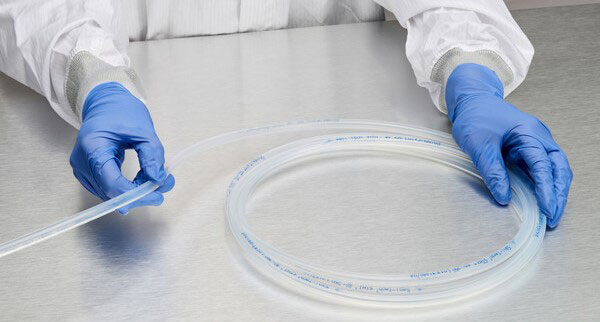
Overview of Tubing Materials
| Feature | Silicone | TPE | PVC | TPV |
| Max Temperature | ~260°C | ~135°C | ~368°C | ~204°C |
| Flexibility | Excellent | Excellent | Good | Moderate |
| Chemical Resistance | Good | Good | Moderate | Excellent |
| Biocompatibility | Excellent | Moderate | Moderate | Good |
| Weld/Seal Capable | No | Yes | No | No |
| Transparency | Yes | Varies by Formulation | Yes | No |
| Best Use Cases | Biopharma, food, media processing | Single-use bioprocessing, peristaltic pumps, sterile welding/sealing | General-purpose lab use, water/air lines, food & beverage | Chemical transfer, peristaltic pumps, fuel or solvent delivery |
| Cost | $$$ | $$ | $ | $$ |
Silicone Tubing
Silicone stands out as a superior tubing material in many applications due to its high-quality standards and versatility. This material is available in two main curing types, which affect performance and suitability. Peroxide-cured silicone is an economical and durable choice for general applications where ultimate purity isn’t the primary requirement. Platinum-cured silicone offers the highest purity and minimal extractables for biopharma processes, critical food production, and regulated environments. Platinum curing also enhances clarity and reduces potential leachables.
TPE Tubing (Thermoplastic Elastomer)
TPE tubing combines the flexibility of rubber with the processability of plastic. It is weldable and sealable, making it a popular choice in single-use bioprocess systems where sterility is critical.
- Cole-Parmer® TPE Tubing: This durable tubing delivers weldable, sealable, and gamma-stable performance and is designed for long service life and peristaltic pump applications.
- Cole-Parmer® Thermoplastic (SEBS) Tubing: This thermoplastic SEBS (styrene-ethylene-butylene-styrene) tubing exhibits superior gas barrier properties and excellent pressure performance.
- Cole-Parmer® Black TPE Tubing: This industrial tubing, manufactured from a TPE compound that consistently outperforms neoprene, EPDM, and general-purpose rubber tubing, safely transfers chemicals and caustic solutions.
- C-Flex® 072 TPE Tubing: Formulated for the demands of biopharma use, this moldable tubing is specifically designed for aseptic welding connections and sealing disconnection while complying with USP Class VI and E.P 3.2.9 standards.
- Eldon James Flexelene™ 135C Reinforced TPE Tubing: This braid-reinforced tubing is built to withstand demanding high-pressure applications while retaining weldability and chemical resistance.
PVC Tubing (Polyvinyl Chloride)
PVC is a cost-effective tubing material valued for its versatility, temperature resistance, and ability to distribute gases effectively, though potential chemical leaching makes it less ideal for sensitive applications.
TPV Tubing (Thermoplastic Vulcanizate)
TPV is a durable, chemically resistant material providing good compression set resistance. It’s a good choice for applications that demand long-term toughness and environmental resistance.
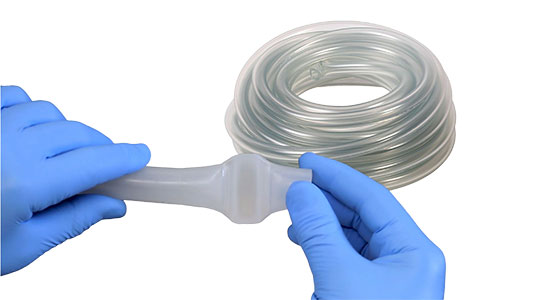
Application Scenarios
- Biopharma Processing: Platinum-cured silicone and TPE are the top choices due to their purity and sterility capabilities. TPE tubing allows easy welding and sealing, making it ideal for aseptic connections.
- General Laboratory Use: Peroxide-cured silicone and PVC provide economical solutions for non-critical fluid transfers.
- Chemical Transfer: TPV stands out with its high chemical resistance and mechanical durability.
- Peristaltic Pumping: All these materials are great for pumping applications. Silicone and TPV excel due to their optimal mechanical strength and long life.

Regulatory and Sterilization Considerations
When selecting tubing, ensure it complies with your industry’s regulatory requirements. Common standards include:
- USP Class VI for pharmaceutical applications
- FDA for food and beverage use
- ISO 10993 for biocompatibility testing
Also, consider how the tubing will be sterilized. Suitable sterilization methods can vary from one formulation to another. Generally, silicone can tolerate autoclaving, gamma irradiation, and ethylene oxide (EtO), while PVC and TPV are suitable for autoclaving and EtO. TPE may degrade or deform under high heat, but specific sterilization options vary based on formulation.
How to Choose the Right Tubing
Choosing the right tubing comes down to aligning the tubing's capabilities with your process needs. Here’s a simple approach:
- Identify the Fluid – Ensure the tubing is chemically compatible with the fluid it encounters.
- Determine the Temperature Range – Make sure the tubing can withstand the minimum and maximum temperatures of your fluid and environmental conditions.
- Check for Regulatory Requirements – Choose tubing that meets your industry's and application's compliance requirements.
- Define Mechanical Demands – Select tubing that can handle the bending, pressure, and pump operation requirements without kinking or premature wear.
- Assess Sterilization Needs – Confirm tubing is suitable for the sterilization method and number of sterilization cycles required by your process.
For detailed fluid compatibility, consult Cole-Parmer’s Tubing Chemical Compatibility Database. To take the guesswork out of finding the tubing you need, use our intuitive Tubing Selector Tool to filter options based on your formulation and size requirements.
Choosing Tubing with Confidence
Selecting the right tubing material is critical to the success, safety, and efficiency of your fluid handling system. Whether you need high-purity silicone for a biopharma application or durable TPV for chemical transfer, understanding the strengths and limitations of each material ensures better performance and compliance. Explore Cole-Parmer’s extensive tubing portfolio or contact an expert for guidance on tubing selection.
Frequently Asked Questions
Q: How does silicone tubing compare to TPE tubing?
A: Silicone is a high-purity tubing that offers excellent biocompatibility and versatility, making it ideal as peristaltic pump silicone tubing for sensitive biological and pharmaceutical processes. Platinum-cured silicone tubing offers the lowest spallation rates of any material. TPE tubing exhibits superior gas barrier properties and is sealable and weldable, commonly used in single-use tubing systems and aseptic assemblies. TPE also has low spallation rates, resulting in reduced particulate generation during repeated stress or pumping cycles.
Q: What are the advantages of TPV tubing?
A: Thermoplastic vulcanizate tubing combines rubber-like flexibility with thermoplastic strength, making TPV tubing well suited for repeated mechanical stress and extended service life. These properties make it a strong option for long life peristaltic tubing applications, while its broad chemical compatibility allows it to function effectively as a chemical resistant flexible hose.
Q: What is the best tubing for peristaltic pump applications in the lab?
A: Silicone tubing for peristaltic pumps is commonly used due to its flexibility and ability to withstand repeated compression. TPV tubing is also widely used as peristaltic pump tubing because of its durability, long service life, and resistance to mechanical fatigue in continuous pumping applications. Typically, TPV tubing exhibits longer pump life than silicone or TPE tubing.
Q: What tubing is best for upstream bioprocessing applications?
A: Upstream bioprocessing requires high-purity tubing materials that maintain product integrity, minimize extractables, and feature low spallation. Silicone tubing and TPE tubing are commonly used in bioprocessing tubing systems because they support aseptic fluid transfer and biocompatibility. The choice of tubing materials depends on whether the process prioritizes peristaltic pumping performance, single-use system integration, or long-life peristaltic tubing.


