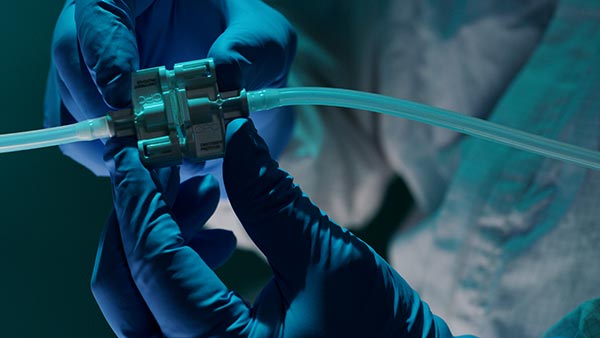
Single-use systems (SUS) are transforming biopharmaceutical manufacturing by offering disposable, pre-sterilized, and aseptic components that replace traditional stainless-steel equipment. These technologies have gained widespread adoption in upstream and downstream bioprocessing, from vaccine research to monoclonal antibody development, due to their ability to:
- Enhance efficiency
- Reduce costs
- Improve product safety
As the industry moves toward more agile and flexible manufacturing models, single-use systems play a crucial role in enabling rapid scalability and regulatory compliance.
What are Single-Use Systems (SUS)?
Single-use systems (SUS), also known as single-use technologies (SUT), are disposable bioprocessing components such as tubing, fittings, sensors, and bottle assemblies designed for one-time use. These systems replace traditional stainless-steel equipment, eliminating the need for cleaning and sterilization between batches.
Key Terminology
- Bioprocessing is the use of living organisms to manufacture biologics, such as vaccines, cell therapies, and antibiotics.
- Sterility Assurance refers to strategies that minimize contamination risks in biomanufacturing, ensuring freedom from harmful bacteria. These strategies include sterilization processes, Sterility Assurance Levels (SAL), and regular testing.
- Validation is the method of collecting and evaluating product or process data to ensure regulatory compliance and quality through documentation and testing
- Closed System Processing involves manufacturing within a sealed system, minimizing exposure to external contaminants
- Tube Welding joins two pieces of tubing using heat fusion, creating an aseptic connection without a connector fitting.
Adherence to compliance standards is critical in this complex and highly regulated industry. Each component within the research and development process must meet specific compliance requirements based on your application. Key regulatory agencies play vital roles in overseeing the safety and quality of cultured meat at various stages of production.
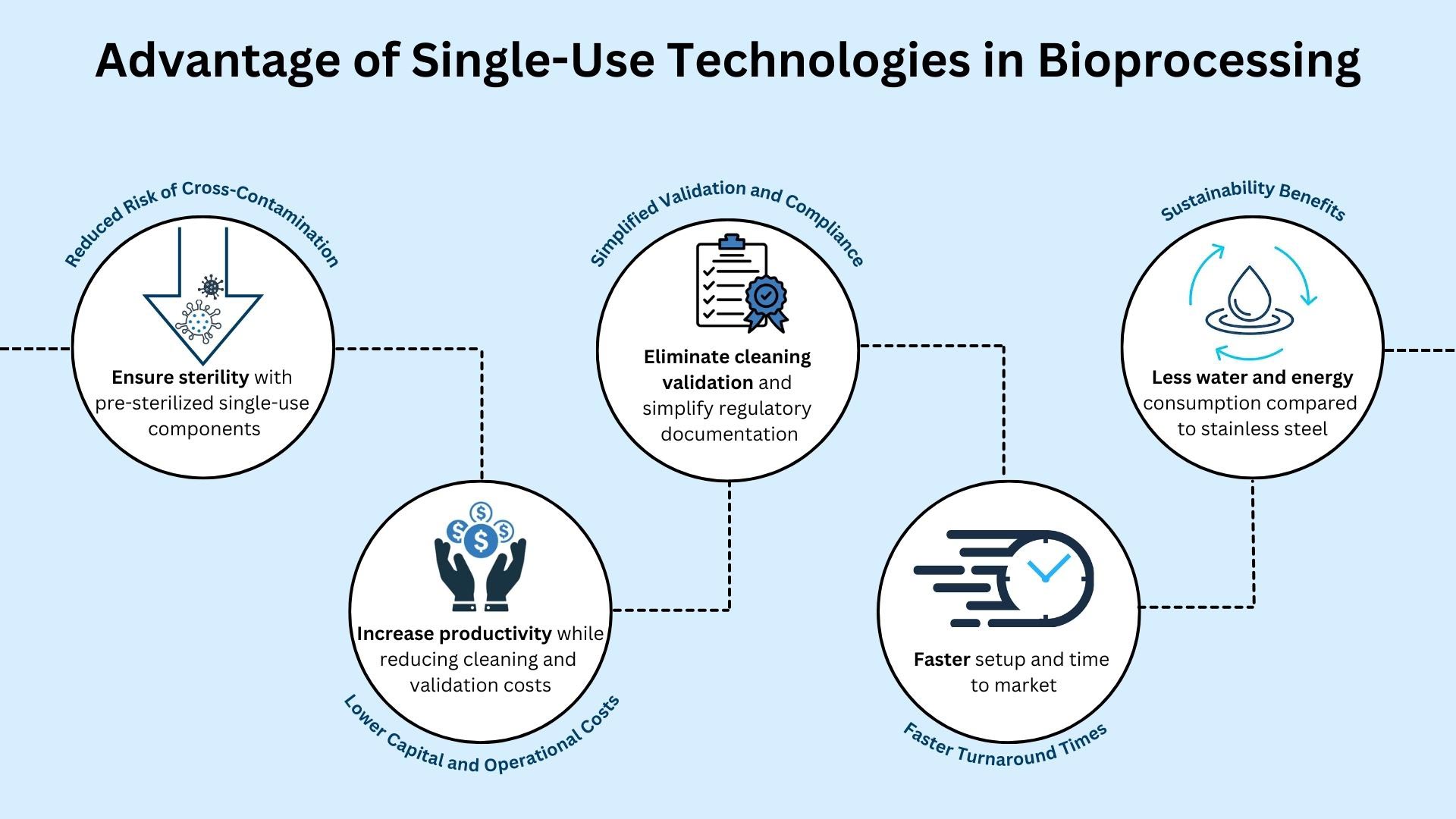
Five Advantages of Single-Use Systems
1. Reduced Risk of Cross-Contamination
Cross-contamination is a major concern in biopharmaceutical production. Traditional stainless-steel systems require rigorous cleaning and sterilization between batches, creating potential contamination risks. Single-use systems eliminate this concern by providing pre-sterilized or disposable components. Since these components are used once and discarded, they prevent product carryover and microbial contamination, ensuring aseptic processing and improving overall product safety.
2. Lower Capital and Operational Costs
Implementing SUS significantly reduces both capital and operational expenditures. Traditional bioprocessing facilities require costly stainless-steel infrastructure, along with extensive cleaning, sterilization, and maintenance programs. With SUS, manufacturers eliminate the need for clean-in-place (CIP) and steam-in-place (SIP) systems, reducing expenses related to water usage, cleaning chemicals, and validation processes. Additionally, single-use systems accelerate batch turnover, increasing overall productivity while lowering operational costs.
3. Simplified Validation and Compliance
Regulatory compliance is a critical aspect of biopharmaceutical manufacturing. Cleaning validation for reusable systems is complex, requiring extensive documentation and repeated testing to meet good manufacturing practice (cGMP) regulations. Single-use systems simplify validation by offering pre-sterilized, pre-qualified components that meet regulatory standards, reducing the burden on manufacturers. This ensures consistent quality and compliance with industry requirements, including FDA, USP, and ISO guidelines.
4. Faster Turnaround Times
Traditional stainless-steel systems require significant downtime for cleaning, sterilization, and requalification between production runs. Single-use systems eliminate these delays, enabling faster changeovers and reducing production bottlenecks. This increased efficiency is particularly beneficial for contract manufacturing organizations (CMOs) and multi-product facilities that require rapid batch transitions. By streamlining workflows, single-use systems accelerate setup and production time.
5. Sustainability Benefits
While single-use technologies generate disposable waste, they provide significant sustainability benefits compared to stainless-steel systems. Single-use systems reduce water and energy consumption by eliminating the need for extensive cleaning and sterilization. Additionally, advancements in recyclable and bio-based materials are improving the environmental footprint of single-use technologies. By reducing resource usage and waste generation, single-use systems support more sustainable bioprocessing practices.
Implementing Single-Use Technologies (SUT) in Bioprocessing
Key Considerations
When integrating single-use technologies, manufacturers must consider several factors to ensure compatibility and efficiency:
- Component Selection: Choosing the right single-use components is essential for ensuring optimal performance in single-use bioprocessing applications. This includes selecting appropriate tubing, fittings, bioprocess bags, and bottle assemblies based on factors such as chemical compatibility, sterility requirements, pressure resistance, and scalability. Additionally, manufacturers should consider pre-assembled and gamma-irradiated options to minimize risks and enhance operational efficiency.
- Regulatory Compliance: Ensuring that all single-use materials comply with required standards such as cGMP, FDA, USP, and ISO is crucial for maintaining product quality and safety. Manufacturers may need to verify that single-use components have undergone rigorous validation testing, including extractables and leachables studies, to meet stringent biopharmaceutical industry requirements. Proper documentation and traceability of materials further support compliance efforts and reduce regulatory hurdles.
- Supply Chain Security: A robust and reliable supply chain is vital for maintaining consistent material quality and availability. Establishing strong partnerships with trusted suppliers, such as Cole-Parmer, ensures that manufacturers receive high-quality, reproducible single-use components with minimal risk of delays or shortages. Additionally, organizations should assess supplier quality management systems, evaluate compliance communications, and maintain inventory buffers to mitigate potential disruptions.
Best Practices
To maximize the benefits of SUS, manufacturers should implement best practices for system integration and operational efficiency:
- Quality Assurance: Conducting thorough material testing and supplier validation ensures component reliability. Gathering compliance and validation documentation prior to integration will save time and ensure required regulatory standards are met.
- Hybrid System Integration: Combining single-use and stainless-steel components in hybrid manufacturing setups may optimize efficiency. This approach allows manufacturers to leverage the flexibility of SUS while maintaining the durability and reusability of stainless steel for specific applications.
- Personnel Training: Providing staff with specialized training on single-use handling, assembly, and disposal procedures minimizes human error, enhances operational efficiency, and ensures compliance with best practices for aseptic processing.
Cole-Parmer Single-Use Solutions
Cole-Parmer has a comprehensive portfolio of single-use solutions designed to enhance efficiency, sterility, and compliance in single-use bioprocessing applications. Some solutions include:
By partnering with Cole-Parmer, biopharmaceutical manufacturers gain access to high-quality single-use solutions that improve operational efficiency and regulatory compliance. Whether implementing single-use components in upstream or downstream processing, sterile filtration, or media preparation, Cole-Parmer provides reliable, effective solutions to support scalable biomanufacturing.
The Future of Single-Use Systems in Bioprocessing
Single-use systems have revolutionized bioprocessing by providing contamination control, cost savings, simplified validation, faster turnaround times, and sustainability benefits. As the biopharmaceutical industry continues to advance, single-use systems will remain a key enabler of flexible and efficient biopharmaceutical manufacturing. To explore how Cole-Parmer’s tubing, fittings, and single-use sensor solutions can optimize your aseptic processing operations.
Frequently Asked Questions
Q: What is the best tubing material for single-use applications?
A: Single-use thermoplastic elastomer tubing (or “TPE tubing”) is commonly selected for bioprocessing systems because it can be welded and sealed, allowing closed-system connections without introducing contaminants. A thermoplastic tubing, TPE is a high-purity, low extractables formulation that supports aseptic fluid transfer.
Q: What is the difference between stainless steel components and single-use assemblies?
A: Stainless steel systems rely on reusable equipment and components that require cleaning and sterilization between production runs. Single-use assemblies replace these with disposable bioprocessing components such as contamination-free process tubing, quick-disconnect fittings, and bottle assemblies designed for one-time use. This shift reduces cleaning requirements and cross-contamination risk for greater operational flexibility.
Q: How does bioprocessing tubing support product quality and process consistency?
A: Bioprocessing tubing is engineered with tightly controlled manufacturing and compliance to ensure purity and performance. High-purity tubing features low extractables profiles, smooth internal surfaces, and compatibility with sterilization methods such as gamma irradiation help protect sensitive products from chemical or particulate contamination. Consistent tubing performance across batches is critical for maintaining reproducible results and minimizing variability.
Q: How do single-use systems improve handling of critical fluids in bioprocessing?
A: In single-use systems, purpose-built tubing for critical fluids is designed to maintain product integrity and eliminate contamination risks associated with cleaning and reuse. Cleanroom-packed, double-bagged, or single-use tubing and assemblies preserve aseptic conditions from installation through operation. This simplifies setup, reduces downtime, and supports rapid changeovers..


 Adherence to compliance standards is critical in this complex and highly regulated industry. Each component within the research and development process must meet specific compliance requirements based on your application. Key regulatory agencies play vital roles in overseeing the safety and quality of cultured meat at various stages of production.