Revolutionize Drug Discovery with Advanced Reaction Stations
In the drug discovery environment, organic synthesis and reaction monitoring are crucial processes for the development of new pharmaceuticals, impacting both the speed and cost of bringing new drugs to market. Organic synthesis is the construction of organic compounds through chemical reactions. It forms the basis of medicinal chemistry and involves the strategic crafting and assembly of organic compounds that possess specific properties and efficacy in biological contexts. Sitting firmly in the lead identification and lead optimization stages of drug discovery, organic synthesis enables the production of varied chemical libraries, lead compounds, and new therapeutic entities. Reaction Monitoring, on the other hand, involves the real-time tracking of these chemical reactions, ensuring that they proceed as planned and yield the desired products. Getting these processes right can make or break your drug discovery workflow. Traditional methods, such as batch or parallel synthesis, mean each reaction is carried out independently in large glass vessels, leading to high resource wastage and increased costs. One way to overcome such challenges is to use a reaction station to conduct multiple experiments in parallel without compromising precision or control. This capability saves time and significantly reduces costs associated with materials and labor. The reaction station enhances your experimental throughput by streamlining synthesis and monitoring, enabling faster progression through the drug discovery pipeline.
Why Should I Use a Reaction Station?
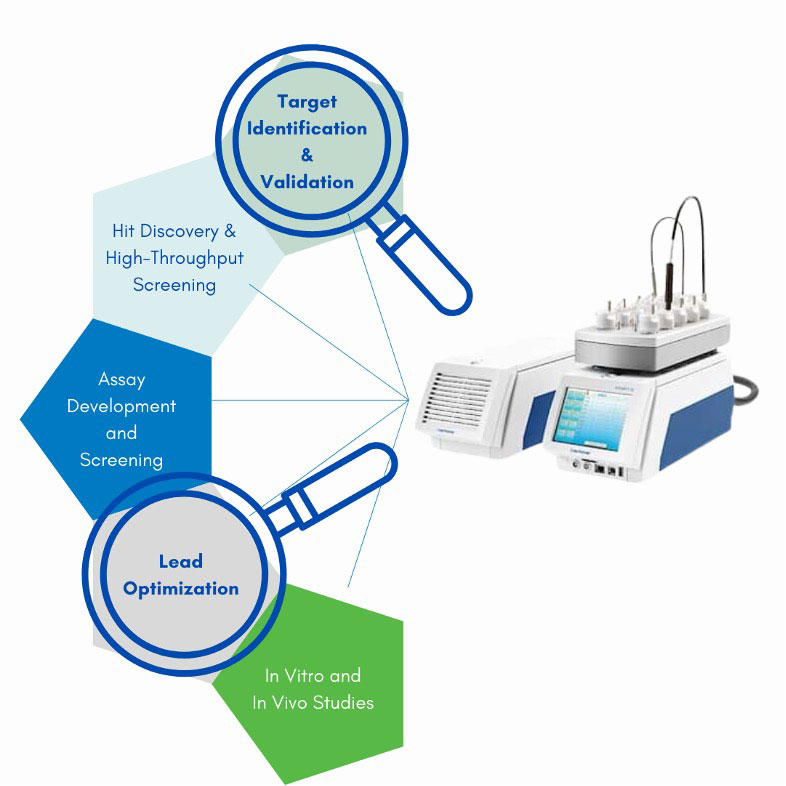
Replacing traditional methods of organic synthesis and reaction optimization with a reaction station offers several key benefits to your drug discovery workflow:
Increased Throughput
The reaction station dramatically increases throughput and helps speed time to market by allowing for simultaneous experimentation. A crucial factor during the lead optimization phase where multiple derivatives of a lead compound are synthesized and tested for improved efficacy and reduced toxicity.
Reduced Resource Consumption
The ability to run multiple experiments in a single, integrated setup reduces the need for multiple sets of equipment, thereby lowering capital expenditures. Additionally, the reaction station's efficient use of reagents and solvents reduces operational costs.
Improved Experimental Outcomes
The reaction station offers precise control over reaction conditions, such as temperature, stirring rates, and timing, ensuring you can reproduce each experiment with high fidelity. This is critical when scaling up successful reactions from the laboratory to production levels.
Real-Time Monitoring and Analytics
This capability allows for immediate adjustments to reaction conditions if necessary, improving the chances of successful outcomes. Furthermore, the aggregation of experimental data facilitates a deeper analysis of reaction mechanisms and kinetics, enriching the scientific understanding of the processes involved.
Safer and Greener Processes
Closed-system configurations often minimize exposure to potentially hazardous chemicals, improving worker safety. Additionally, the design of reaction stations means less solvent and minimal waste byproducts, contributing to more sustainable practices.
Introducing the Cole-Parmer® Integrity 10 Reaction Station: A Solution for Modern Synthesis Challenges
The reaction station is not just a piece of equipment; it's a pivotal part of your drug discovery process. Developed in collaboration with partners at Pfizer and the Illinois Institute of Technology, the Cole-Parmer® Integrity 10 Reaction Station Cole-Parmer® Integrity 10 Reaction Station can perform 10 independent experiments at once, whether ten of your reactions or ten different scientists optimizing reactions.
What is the Cole-Parmer® Integrity 10 Reaction Station useful for?
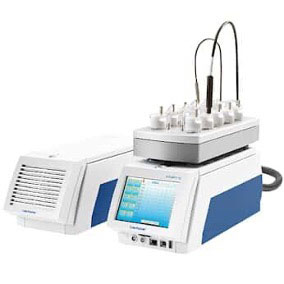
Parallel Synthesis: Simultaneously synthesize multiple compounds in separate reaction vessels to generate diverse compound libraries in drug discovery.
Metastable Zone Widths: Understand the range of supersaturation levels within which a compound can exist in a metastable state before crystallization occurs.
Solubility Studies: Measuring a compound's ability to dissolve in a solvent under specific conditions is critical for predicting drug behavior in vivo and optimizing formulation strategies.
Reaction Optimization: Fine-tune reaction conditions to maximize yield, selectivity, and efficiency, essential for improving the quality and reproducibility of chemical reactions.
Polymorph Screening: Identify different crystalline forms of a compound to select the most suitable form for drug formulation based on desired properties and stability profiles.
Stability Studies: Assess the chemical and physical stability of drug substances or formulations to determine shelf-life and storage conditions, ensuring efficacy and safety over time.
Kinetic Studies: Investigate the rate and mechanism of chemical reactions, optimize reaction conditions, predict outcomes, and design efficient synthesis routes.
Catalyst Screening: Evaluate how different catalysts accelerate or control chemical reactions to identify the most effective catalyst and optimize reaction conditions.
High-Throughput Screening (HTS): Rapidly screening large compound libraries against biological targets identifies potential drug candidates, accelerating the drug discovery process.
Hit Screening: Validating and characterizing initial hits identified through high-throughput screening confirms activity, assesses selectivity and prioritizes hits for further optimization.


