Peristaltic pumps are widely used for accurate fluid dispensing thanks to their contamination-free design, gentle pumping action, and ease of use. But accuracy doesn’t come automatically, it depends on proper setup, calibration, and tubing management.
This article outlines three proven methods to improve dispensing accuracy, shares best practices for tubing break-in, and highlights how the Cole-Parmer Fluid Handling Application Lab supports high-precision applications. You’ll also find practical tips & tricks with field-tested advice to keep your process consistent over time.
Why Should You Use Peristaltic Pumps for Dispensing?
Peristaltic pumps use rotating rollers to compress flexible tubing, pushing fluid through the tubing in a controlled and repeatable way. The fluid only contacts the tubing, making these pumps ideal for sterile, reactive, or abrasive media.
Dispensing Benefits:
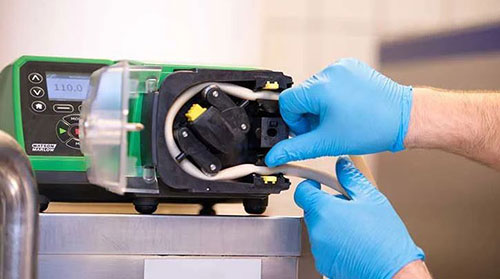
- No cross-contamination, the fluid is isolated from pump components.
- Easy tube replacement, no cleaning required.
- Handles a wide range of viscosities and fluid types.
- Reversible flow and self-priming operation.
However, peristaltic pump accuracy can be affected by several factors:
- Tubing wear and elasticity
- Back pressure or suction height
- Pump speed control
- Fluid viscosity and temperature
Tubing Break-In:
One of the most overlooked factors in dispensing accuracy is tubing break-in. New tubing stretches slightly after the initial compressions, which affects how much fluid it delivers per rotation.
Best Practices:
- Run tubing at your operating speed for 15-30 minutes.
- Calibrate pump system after the break-in period.
- Replace tubing regularly, as fatigue impacts flow rate over time.
Dispensing accuracy is a key advantage of peristaltic pumps, but selecting the right method to verify accuracy can improve results even further. Three commonly used methods offer different levels of control depending on your process needs.
Method 1: Gravimetric Dispensing Using a Balance
Using a lab balance to weigh the dispensed fluid is the most accurate method to confirm and calibrate peristaltic pump output. This gravimetric method allows users to measure actual mass, convert to volume, and fine-tune the system. To convert mass to volume, you need the density of the substance. The formula is: Volume = Mass / Density
Setup:
- Tare a receiving container on a calibrated balance.
- Dispense fluid using the peristaltic pump.
- Record the mass dispensed and convert to volume.
- Adjust pump speed or dispensing time as necessary.
- Save calibration settings if the pump has that capability or document the adjusted settings and deviations from expected values.
Advantages:
- High repeatability and accuracy
- Works with a wide range of volumes
Best For:
- Pharmaceutical filling of vials or syringes
- Research labs conducting trace-volume experiments
- Cosmetic product dispensing
Method 2: Calibration with Volumetric Vessels
This straightforward method involves dispensing fluid into a graduated cylinder or volumetric flask and visually confirming the output.
Advantages:
- Simple and inexpensive
- Fast for rough calibration
Limitations:
- Lower accuracy than gravimetric methods
- Visual reading may be subjective
Best For:
- Educational labs and pilot studies
- Water treatment systems with general volume targets
- Chemical handling applications with moderate precision needs
Method 3: Flow Sensors and Inline Monitoring
When real-time monitoring and control of flow is required, integrating flow sensors can dramatically improve accuracy and consistency. These sensors provide live feedback, making it easier to adjust parameters or automate batch operations.
Sensor Types:
- Variable Area Flowmeters (Rotameters): A simple, visual method for checking flow rate. While not electronic or digital, rotameters are inexpensive and provide a clear indication of whether flow is within range.
- Laminar Differential Pressure Flowmeters: These high-precision flowmeters use pressure drop across a laminar flow element to calculate flow rate. They are highly accurate and suitable for low-flow and clean applications. Their compact size and lack of moving parts make them ideal for integration with peristaltic pump systems.
- PendoTECH PressureMAT Plus Monitor with Flow Sensor Input: Designed for single-use bioprocessing applications, this system combines pressure and flow monitoring for easy control of peristaltic pump performance. The PressureMAT Plus accepts data from compatible flow sensors to enable accurate flow measurement alongside pressure data, helping maintain consistent conditions in critical environments.
Advantages:
- Real-time flow feedback and monitoring
- Supports closed-loop control with PLCs or batch controllers
- Ideal for validating fluid delivery during longer or automated runs
Best For:
- Biopharmaceutical manufacturing using single-use systems
- Chemical production with tight batch control requirements
- Process development labs seeking to scale up with validated flow profiles
- TFF or chromatography processes where pressure and flow must be controlled together
Guaranteed Tubing Performance with the Cole-Parmer Fluid Handling Application Lab
For complex dispensing challenges, working with the
Cole-Parmer Fluid Handling Application Lab can accelerate validation, improve system performance, and reduce trial-and-error.
What the Lab Offers:
- Flow rates verified for consistency to support accurate dosing and transfer.
- Tubing life validated for longevity to help you reduce downtime and replacement frequency.
- Dispensing accuracy validated across leading pump brands, saving you time and guesswork.
Best For:
- Biopharma and biotech companies needing regulatory validation
- Process engineers scaling up from pilot to production
- OEMs and equipment designers integrating pumps into larger systems
Tips and Tricks for Accurate Dispensing Every Time
Even with the right equipment and setup, maintaining accurate dispensing overtime requires attention to detail. These proven tips can help extend system life, minimize variability, and streamline validation in regulated environments.
Update Calibration Settings Regularly - Tubing wear or changes in back pressure can impact accuracy over time. Some pumps let you store multiple calibration profiles, use this feature for different fluids or setups and update regularly.
Keep Detailed Documentation - Maintain logs of tubing lot numbers, calibration data, dispensing volumes, and testing intervals. This helps identify sources of error and supports regulatory compliance.
Avoid Tubing Overuse - Worn tubing loses elasticity and flow consistency. Visual signs of tubing overuse can be flattening, deformation, discoloration, or cracks and brittleness. Set a replacement schedule based on runtime or cycle count.
Validate with Real Fluids and Setup - Perform calibration and testing with the actual fluid used under real system conditions. Viscosity and density affect flow behavior while back pressure from downstream restrictions (filters, valves, or elevation changes) can affect flow.
Slow Down Pump Speed - Higher speeds may reduce accuracy in low-volume dispensing. Use slower speeds for better control over small volumes.
Keep Tubing Length as Short as Possible - Long tubing increases internal resistance and can introduce back pressure or flow variability, especially at low dispense volumes. Keep tubing runs short and direct to maintain consistency and reduce system response time.
Ready to Dispense with Confidence?
Accurate dispensing with peristaltic pumps isn’t just about choosing the right pump, it’s about selecting the right setup, applying proper calibration methods, and understanding how to maintain performance over time.
When precision matters, Cole-Parmer offers the tools, expertise, and support to help you deliver consistent, repeatable results. If you're ready to optimize your dispensing process, browse our full selection of peristaltic pumps or explore our fluid handling solutions to find the right components and guidance for your application.


