In regulated industries where sterility, repeatability, and documentation are essential, selecting the wrong stopcock can introduce unnecessary risk. With options ranging from simple 1-way on/off valves to more advanced 4-way fluid-routing designs, understanding the differences can streamline operation, reduce contamination concerns, and enable flexible routing tailored to your process. Cole-Parmer offers a comprehensive selection of stopcocks engineered to meet the demands of single-use and regulated fluid handling processes.
What Is a Stopcock?
A stopcock is a manually operated valve with two or more ports, which are entry or exit points that direct and control the flow of liquids or gases. Rotating the handle opens or closes the flow paths, also called “ways,” inside the valve body.
Stopcocks are common in:
- Bioprocessing sampling lines
- Media and buffer preparation
- Single-use bioreactors
- Pharmaceutical fill/finish applications
Why Use Single-Use Stopcocks?
- Reduce cross-contamination risk
- Eliminate cleaning validation
- Support modular bioprocessing assemblies
- Improve workflow flexibility
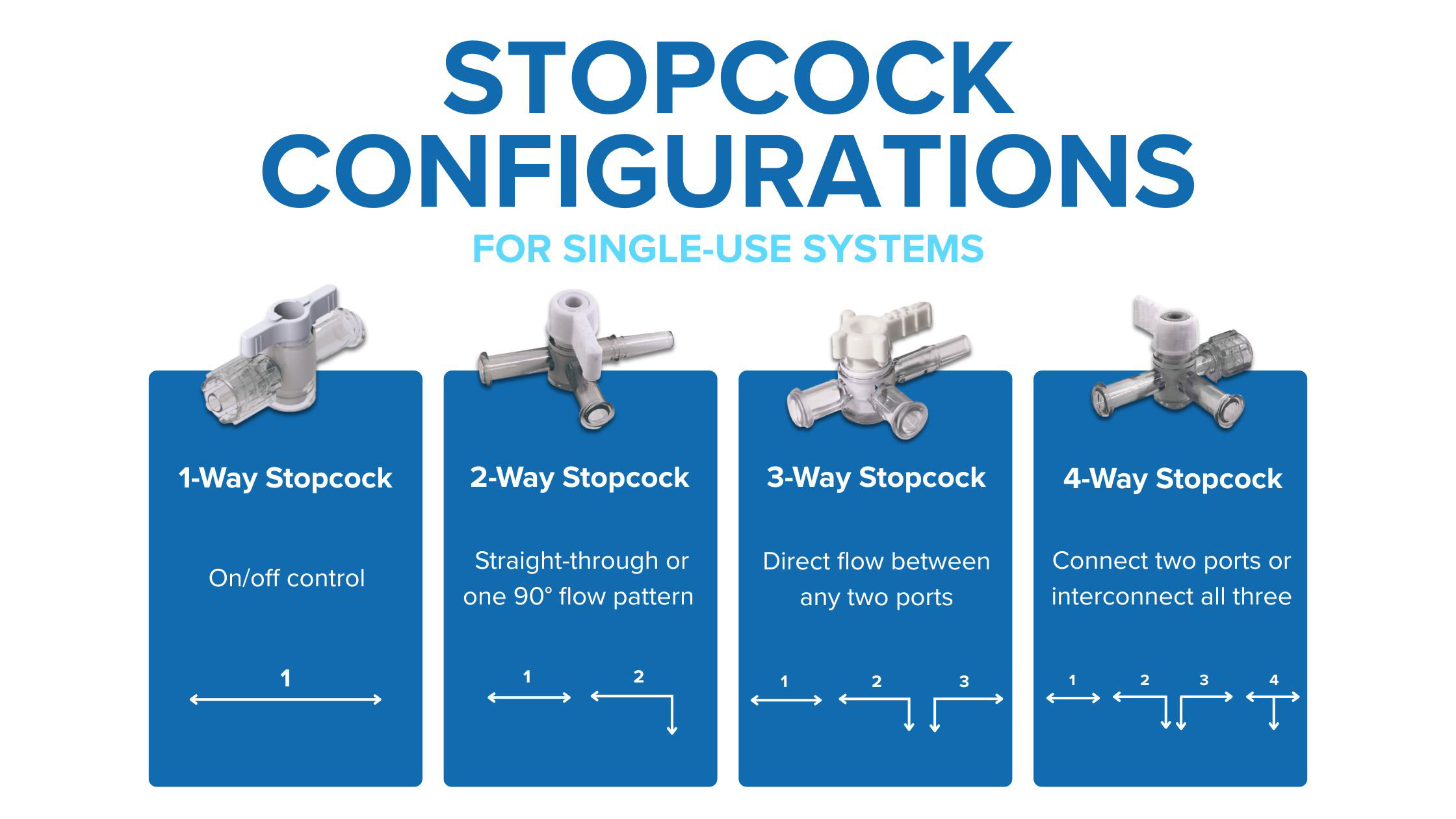
Key Considerations When Choosing a Stopcock
Choosing the right stopcock begins with understanding what your process demands. These factors will help ensure reliable and compliant flow control in regulated or single-use environments.
1. Number of Ports
Determine whether a 2-port or 3-port configuration best supports your routing needs. Two-port stopcocks offer simple, straight-through flow, while three-port models enable more flexible, multi-directional connections.
2. Flow Control Requirements
Consider what “ways” or flow patterns are needed.
- Simple on/off control
- Switching between lines
- Mixing or dividing flow
3. Connection Types
Ensure the connection type supports a secure attachment and prevents accidental disconnection.
- Female luer: Provides a universal connection point for male luer fittings.
- Male slip luer: Offers a quick, push-fit connection for low-pressure or temporary setups.
- Male lock luer: Features a threaded design for a secure, high-integrity connection that resists disconnection under pressure.
- Bond port: Creates a permanent tubing connection by chemically or physically bonding the tubing to the port; simply match the tube outer diameter (OD) to the bond port size.
4. Pressure Ratings
Utilize high-pressure stopcocks or male lock luer connections for applications that experience higher pressure. Male luer lock connections provide enhanced pressure capability and a more secure engagement.
5. Sterilization Method
Select a stopcock material that matches the required sterilization method to ensure consistent performance and regulatory compliance in single-use processes.
- Gamma-Stable Polycarbonate: ethylene oxide (EtO) or gamma irradiation
- Polycarbonate: ethylene oxide (EtO)
- Kynar® PVDF: Autoclave, ethylene oxide (EtO), or gamma irradiation
6. Chemical Compatibility
- Polycarbonate (PC): durable, transparent, good chemical resistance
- PVDF (Kynar®): high purity, exceptional chemical resistance, highly compliant
Leverage Cole-Parmer’s Chemical Compatibility Database to verify material compatibility and avoid degradation.
7. Documentation Requirements
Verify compliance with key certifications and ensure the availability of documentation. Cole-Parmer stopcocks support regulated environments where documentation matters.
Certifications to consider:
- ISO 80369-7
- ISO 594-1 and 594-2
- USP Class VI
- FDA
Look for suppliers offering:
- Certificate of Compliance (CoC)
- Validation guides
- Lot traceability
Stopcock Types Explained
1-Way Stopcocks
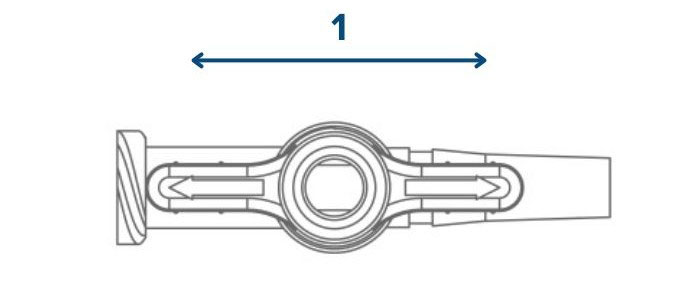
A 1-way (on/off) stopcock features a single channel and provides simple open/close flow control. This is the most basic type, ideal for processes that require a reliable shut-off.
Best For
- Drain lines
- Chromatography column fillings
- Sampling ports
- Single-stream titration
2-Way Stopcocks
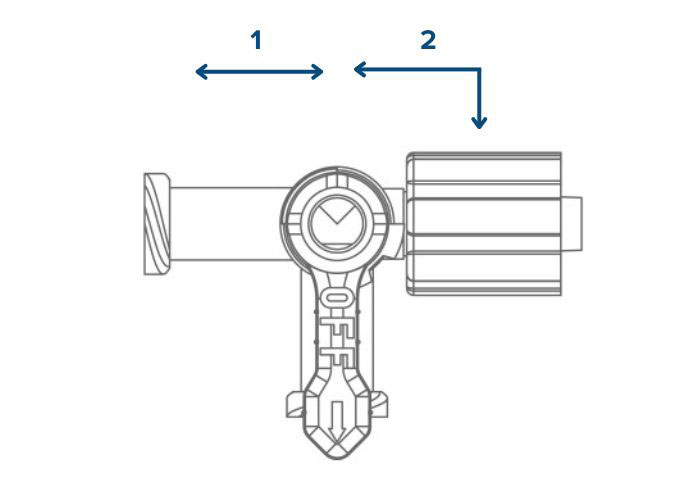
The 2-way, 3-port stopcocks provides a straight-through or one 90° flow pattern. Turning the handle to a specific port closes that path, while the other two ports remain open. The handle can only be turned to the 'off' position at either the male luer port or the female side luer port.
Best For
- Cleaning in place (CIP)
- Sample diversion for quality control testing
- Bioreactor feed control
3-Way Stopcocks
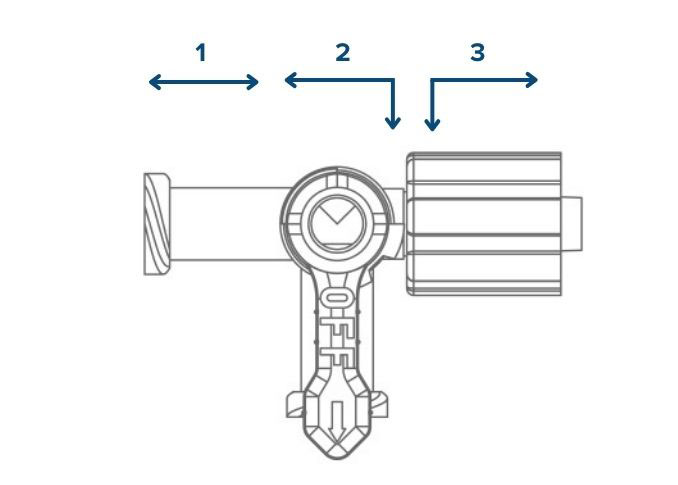
A 3-way stopcock typically includes three ports in a T-configuration. The handle is used to direct flow between any two ports.
Best For
- Process monitoring integration
- pH control acid/base addition
- Switching between two supply lines
- Integrating a buffer exchange system
4-Way Stopcocks
4-way stopcocks allow fluid to be routed between three different ports in multiple combinations. Flow can be directed between any two ports or interconnect all three ports simultaneously.
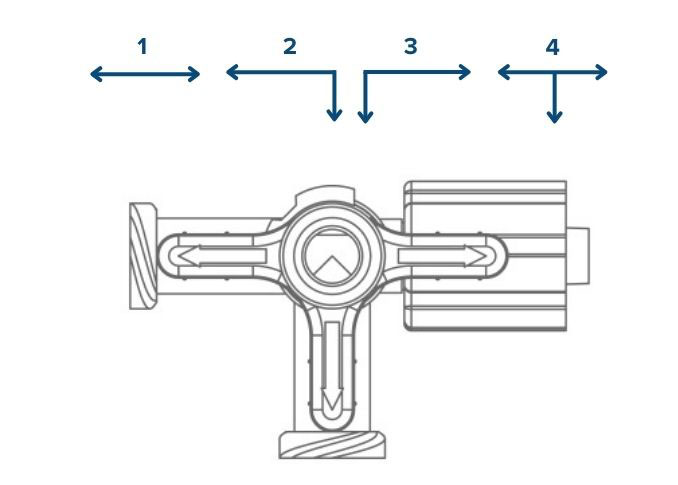
Best For
- In-line analysis
- Multi-step sampling
- Waste and media distribution
- Parallel addition or removal
Comparing Stopcock Types for Single-Use Bioprocessing
A side-by-side look at common stopcock types highlights how variations in port layouts and flow patterns translate into advantages for different bioprocessing tasks.
| Stopcock Type | # of Ports | Flow Patterns | Typical Applications | Key Advantages |
| 1-Way | 1 | Straight through on/off control | Sampling, drain lines | Simple, secure shutoff |
| 2-Way | 3 | Straight-through or one 90° path | Line switching, sample diversion | Easy routing, low dead volume |
| 3-Way | 3 | Straight-through or two 90° paths | Process integration, parallel sampling | Multiple routing options |
| 4-Way | 3 | Route through any ports or all three simultaneously | Complex routing, sample mixing | Maximum flexibility |
Application Examples
Biopharmaceutical Production
Stopcocks help route media, buffers, and process fluids in sterile, modular single-use assemblies. They enable precise control of fluid direction, allowing processes to remain efficient and contamination-free.
Single-Use Bioreactor Systems
Stopcocks are commonly used in sampling ports, feed lines, and transfer tubing within bioreactor systems. They also manage CIP/SIP bypass lines, waste removal, and inline sensors, giving operators flexibility without compromising sterility.
Fill/Finish Workflows
3-way and 4-way stopcocks simplify vial filling, reagent addition, and precision flow switching. These stopcocks allow multiple fluid paths to be managed simultaneously, improving throughput and reducing the risk of cross-contamination.
Chromatography and Analytical Processes
Stopcocks control flow paths for purification, separation, and inline analysis. They are used in sample injection, buffer exchange, elution control, and column isolation, ensuring reliable and repeatable results.
Troubleshooting & Best Practices
Common Issues
- Leaks: Often caused by improper seating or over-torquing of the stopcock.
- Blockages: Residue from prior use can accumulate, reducing flow and effectiveness.
- Port Misalignment: Proper alignment of inlet, outlet, and side ports is critical for accurate fluid control.
Best Practices
- Proper Priming: Prime thoroughly to remove air bubbles and ensure smooth fluid flow.
- Label and Document: Clearly label each port and document connected fluids to prevent confusion and enhance workflow accuracy.
- Regular Inspections: Periodically inspect for signs of wear, cracks, or leaks. Replace components that show deterioration.
- Clean or Replace After Use: Prevent residue accumulation by rinsing thoroughly and replacing components that are disposable or cannot be reliably cleaned.
Final Thoughts
Selecting the right stopcock enhances fluid routing, maintains sterility, and improves process performance in single-use systems. Whether your workflow needs a simple shutoff or a complex multi-line switching solution, understanding port configurations, routing patterns, and tubing compatibility ensures reliable and repeatable results.
Cole-Parmer offers a portfolio of high-quality stopcocks for bioprocessing and laboratory applications, backed by documentation, expert support, and reliable inventory.


